Modular architecture
Information is organized into coherent blocks that explain common operational elements, from data capture to review milestones.
cryptogene 21 serves as a premium briefing on automated trading ecosystems, delivering crisp overviews of how finance platforms coordinate processes, dashboards, and governance. Inspect core modules, setup surfaces, monitoring views, and policy-driven routing to grasp how these systems are typically organized for reliability and scale.
cryptogene 21 delivers concise, digestible briefs on product-focused concepts within financial services, including data views, control dashboards, and auditing routines. The site emphasizes accessibility, responsive layouts, and consistent policy navigation across pages.
Information is organized into coherent blocks that explain common operational elements, from data capture to review milestones.
Clear typography, keyboard-accessible navigation, and consistent layouts ensure smooth usage on desktop and mobile.
Policy pages are linked consistently to help users locate essential information without friction.
cryptogene 21 aims to present finance-focused workflow concepts in a straightforward, factual tone, prioritizing clarity, consistency, and transparent policy context. This space helps readers grasp common interface elements and operational routines without offering tailored guidance.
Concise paragraphs and scannable cards help you spot essentials in moments.
Details emphasize settings surfaces and ongoing monitoring routines used in operations.
Linking and structure stay steady to support reliable browsing.
cryptogene 21 is built on pragmatic standards used in financial-services publishing: transparent disclosures, precise wording, and a focus on the operational backdrop. The principles below illustrate how we craft content and organize pages.
Text remains descriptive and informational, spotlighting interface patterns and workflow components.
Policy routing and consent wording stay accessible and uniform for easy review of key pages.
Sections emphasize how systems are organized: data views, controls, monitoring routines, and audit points.
Pages are structured to keep policy access consistent and to invite careful reading of linked documents.
Layouts adapt gracefully on small screens to minimize friction and eliminate horizontal scrolling.
We vet content for consistent terminology, accessible structure, and clearly aligned sections.
Sign up to unlock richer modules and enhanced page templates.
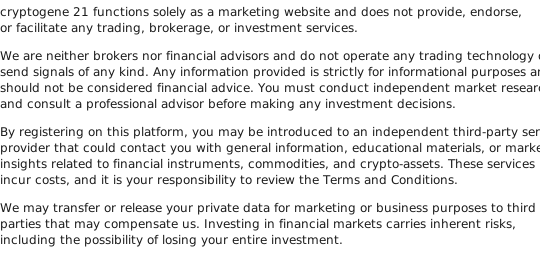
This website functions solely as a marketing platform and does not provide, endorse, or facilitate any trading, brokerage, or investment services.
Read More